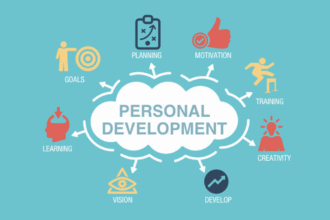
strategies for building personal business success through growth-oriented mindset, planning, branding, productivity, and development.
In today’s competitive digital world, building a successful personal business requires more than just ambition; it requires structured development, consistent execution, and a willingness to adapt. Entrepreneurs, freelancers, and small business owners must learn how to combine strategy with discipline to achieve sustainable results.
Below, Build Business Success will outline the essential pillars of personal business development to help you build a strong foundation for long-term growth.
Mindset Foundation for Business Growth
A strong business begins with a strong mindset, because your thoughts shape your actions and decisions. Developing a growth mindset allows you to view challenges as opportunities rather than obstacles. Instead of being discouraged by failure, you learn from it and adjust your approach.
This mental shift is essential for long-term success, especially in competitive markets where uncertainty is constant. When you believe that skills and abilities can be improved, you naturally become more open to learning and experimentation, which increases your chances of success. In addition to resilience, discipline plays a critical role in shaping your mindset.
Strategic Planning and Goal Setting
Strategic planning is the bridge between ideas and execution, turning vague intentions into structured action steps. Without a plan, even the most creative ideas can lose direction. Setting clear goals using a structured framework like SMART goals helps ensure that objectives are realistic and trackable.
When goals are broken down into smaller tasks, they become less overwhelming and easier to achieve. This approach creates momentum, which is essential for consistent progress in any personal business journey. Beyond goal setting, prioritization is another critical part of strategic planning. Not all tasks contribute equally to business growth, so it is important to identify high-impact activities.
Also Read: The Key To Success: Smart Business Management Strategies
Personal Branding and Market Positioning

Personal branding is the way you present yourself and your business to the world, shaping how others perceive your value. A strong personal brand communicates trust, professionalism, and expertise. In today’s digital environment, your online presence often becomes the first impression for potential clients or partners.
Therefore, maintaining consistency across platforms such as websites and social media is essential. Clear messaging helps define who you are, what you offer, and why you are different from competitors. Market positioning goes hand in hand with branding because it determines where you stand in your industry.
Productivity and Time Management Systems
Productivity is the engine that drives business success, and time management is the fuel that keeps it running efficiently. Without proper systems in place, tasks can become overwhelming and disorganized. Effective entrepreneurs prioritize tasks based on importance rather than urgency, ensuring that key goals are always addressed first.
Creating daily and weekly schedules helps maintain structure and prevents wasted time. This organized approach allows you to focus on meaningful progress instead of constant distractions. Time management also involves eliminating inefficiencies. Many successful individuals use techniques such as batching similar tasks, setting time blocks, and reducing multitasking.
Continuous Learning and Scale-Up
Continuous learning is essential in a world where industries, technologies, and customer behaviors are constantly evolving. Staying updated with new trends allows you to remain competitive and relevant. Entrepreneurs who invest time in learning through books, courses, mentorship, and real-world experience tend to make better decisions.
Learning is not limited to formal education, it also comes from analyzing mistakes and improving strategies over time. Sustainable scaling focuses on growing a business in a way that maintains quality and stability. Rapid growth without proper systems can lead to operational challenges and loss of customer trust.
Conclusion
Building personal business success requires consistent effort across multiple areas, including mindset, planning, branding, productivity, and continuous learning. Each component contributes to long-term growth and stability.
When these elements work together, they create a strong foundation for sustainable development. Success is not a single achievement but an ongoing process of improvement, discipline, and adaptation. By applying these principles consistently, anyone can build a more structured and rewarding business journey.
Image Source:
First Image from: esoftskills.com
Second Image from: flowartsinstitute.com